
Congaree National Park
4.7(4.3K)google
4.5(107)yelp
Wetland
Overview
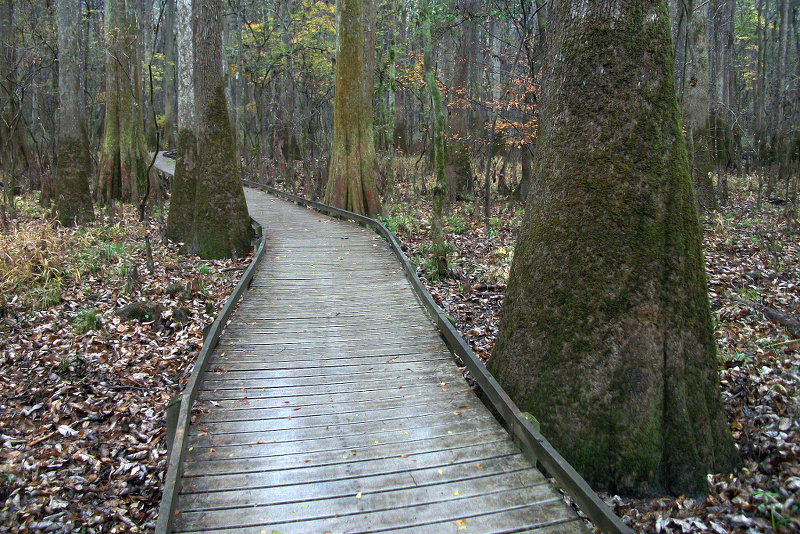
Located just outside Columbia, South Carolina, Congaree National Park protects the largest intact expanse of old-growth bottomland hardwood forest remaining in the southeastern United States. The park is a lush, subtropical wilderness sanctuary characterized by massive, towering bald cypress and water tupelo trees that create an ethereal forest canopy. Visitors can explore this prehistoric landscape by walking the iconic 2.4-mile boardwalk loop trail, kayaking along Cedar Creek, or hiking rugged backcountry pathways. Home to incredible biodiversity, including owls, wild wild hogs, and rare synchronous fireflies, it offers an astonishingly quiet and primeval wilderness experience for global eco-travelers.
Practical Info
Suggested Duration3-6 hours
Best TimeMid-April to late May and October to early November are the ideal periods. Late spring avoids intense summer heat and mosquitoes, with a chance to witness the synchronized fireflies in mid-to-late May, while autumn offers stunning bald cypress fall foliage. Early morning is the best time of day, as ethereal mist hovers over the swamp and old-growth canopy, creating magical lighting for photography.
Getting ThereDue to its remote location with no direct transit options, driving is highly recommended. From downtown Columbia, take SC-48 E (Bluff Road) southeast for approximately 18 miles, then follow the clear brown park signage to turn right onto Old Bluff Road, which leads directly to the Harry Hampton Visitor Center parking lot.
Travel Tips
- Set in a low-lying floodplain, the park updates a 1-to-6 scale 'Mosquito Meter' daily. From May to October, when indices regularly hit severe levels, standard sprays fail; donning fine-mesh head nets, ripstop long apparel, and carrying maximum-strength DEET is mandatory.
- The iconic Boardwalk Loop is prone to falling canopy debris, known as 'widowmakers,' during and after sudden atmospheric squalls. The wooden planks host permanent moss matrices that become incredibly slick when wet; smooth-soled footwear is barred in favor of vibram hiking boots.
- Paddling the Cedar Creek Canoe Trail demands advanced orienteering proficiency. Disorienting deadfall and identical cypress knees camouflage routes within a total cell coverage blindspot, making hand-held GPS units, offline tracking sheets, and magnetic compasses non-negotiable.
Reviews
Positive
- It boasts the largest intact expanse of old-growth bottomland hardwood forest in the US; the towering trees and unique swamp scenery offer immense visual awe.
- The 2.4-mile elevated Boardwalk Loop is excellently maintained and fully accessible, greatly facilitating seniors and wheelchair users.
- As one of the few completely free national parks in the US, it charges zero admission or parking fees; its pristine serenity and value are flawless.
- The free self-guided multi-language maps at the visitor center are detailed, and wild survival safety tips and trail signs are well-placed.
Heads up
- Mosquitoes and bugs are despairingly abundant in summer and fall, nicknamed a 'mosquito empire'; walking is impossible without heavy-duty repellent sprayed in advance.
- Except for the main boardwalk, many primitive dirt trails deeper in the forest are highly prone to complete flooding, and trail signs become blurred.
- The location is relatively remote with no public transit, and there are no dining facilities inside, meaning you will go hungry without packing food.
- During the famous synchronous fireflies season in May/June, lottery slots are extremely hard to win, leaving many unlucky long-distance travelers disappointed.