
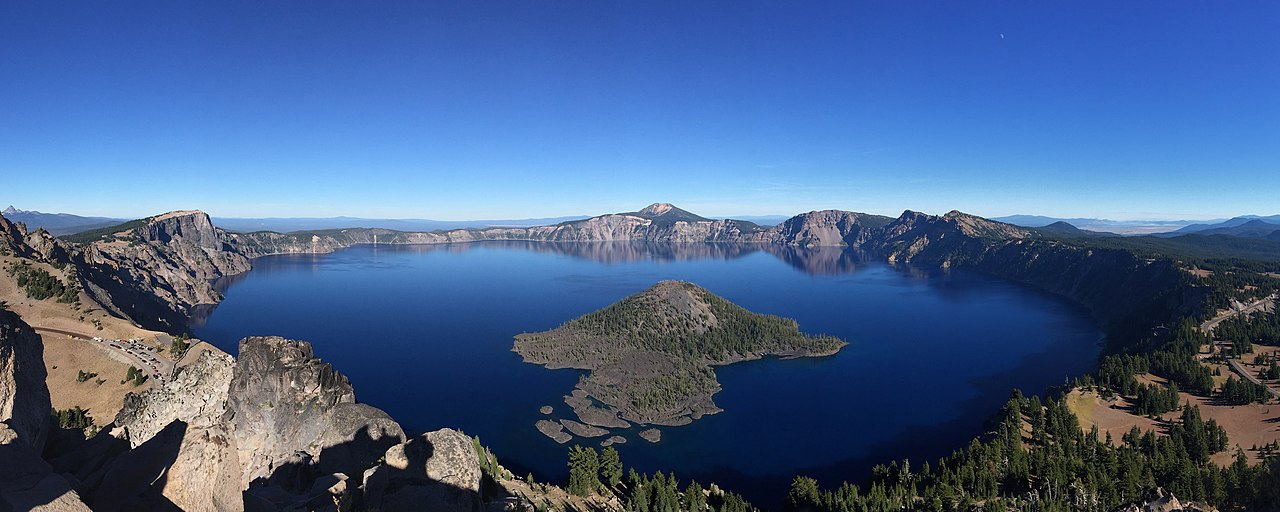
Crater Lake National Park
Overview
Crater Lake National Park preserves one of the most awe-inspiring natural wonders in North America. Formed approximately 7,700 years ago by the violent eruption and subsequent collapse of Mount Mazama, this massive caldera has filled over millennia purely with rain and snowmelt. Holding the title of the deepest lake in the United States (reaching a depth of 1,949 feet), its complete isolation from inlets or outlets makes it one of the clearest and most pristine bodies of water on Earth. The lake is world-renowned for its intense, surreal sapphire-blue hue. Visitors can embark on the historic 33-mile Rim Drive to enjoy spectacular cliffside overlooks, take seasonal boat tours to explore the iconic Wizard Island, or stay late to experience some of the finest, light-pollution-free stargazing in the country.
Practical Info
Travel Tips
- Critical long-term closure: For the entire 2026, 2027, and 2028 summer seasons, the Cleetwood Cove Trail—the single legal path down to the water for boat tours and swimming—is entirely closed for multi-year rehabilitation, restricting all lake views to the rim.
- Seasonal road restrictions: The 33-mile Rim Drive and North Entrance Road close strictly on November 1 for winter snow, reopening in stages only between late June and mid-July; winter and spring vehicular access is restricted to OR-62 via the South or West entrances.
- Snow cornices and wilderness danger: At elevations over 7,000 feet with 42 feet of annual snow, unstable snow ledges overhang the caldera rim; crossing retaining walls is prohibited, cellular signals are non-existent, and descending the inner caldera triggers steep federal fines.
Reviews
- Standing on the volcanic rim cliffs thousands of feet high, looking down at the breathtakingly deep-blue gem of a lake, the visual impact is unmatched and authentic.
- The Rim Drive scenic overlooks are well-arranged with clear signs and detailed multilingual map brochures, and accessible viewing platforms are highly maintained.
- The historic Crater Lake Lodge is rich in classic Western wilderness design, with public restrooms, trash bins, and resting areas perfectly managed.
- It charges a standard, transparent per-vehicle national park entry fee, offering perfect value for a world-class wonder that preserves pristine, quiet calm.
- Due to high altitude and heavy snow, the winter and spring closure seasons last for months, leaving the main Rim Drive and core trails blocked and resembling a photo trap.
- During sunny midsummer weekends in July and August, core viewpoints suffer from exploding crowd density with long traffic lines, ruining the wild tranquility.
- The only trail down to touch the water is Cleetwood Cove, which is intensely steep with hundreds of gravel switchbacks, a draining ordeal for young kids.
- The sparse on-site dining features typical high-premium tourist markups with expensive basic sandwiches and slow, disorganized queues during peak hours.