
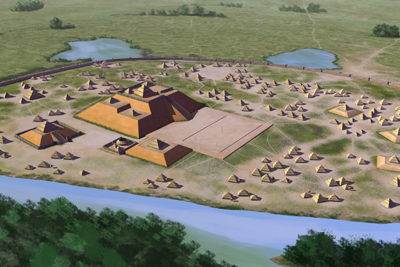
Etowah Indian Mounds State Historic Site
4.7(1.5K)google
4.6(35)yelp
History
Overview
Etowah Indian Mounds (9BR1) are a 54-acre (220,000 m2) archaeological site in Bartow County, Georgia, south of Cartersville. Built and occupied in three phases, from 1000–1550 CE, the prehistoric site is located on the north shore of the Etowah River. Etowah Indian Mounds Historic Site is a designated National Historic Landmark, managed by the Georgia Department of Natural Resources.
Practical Info
Mon9:00 AM – 5:00 PM
Tue9:00 AM – 5:00 PM
Wed9:00 AM – 5:00 PM
Thu9:00 AM – 5:00 PM
Fri9:00 AM – 5:00 PM
Sat9:00 AM – 5:00 PM
Sun9:00 AM – 5:00 PM
Suggested Duration2-3 hours
Best TimeThe transitional spring (March to May) and crisp autumn (October to November) are ideal, offering refreshing, dry weather perfect for historic open-field hiking. The optimal daily block is 10:00 AM to 1:30 PM; clear midday sunlight flawlessly illuminates the 6 monumental, hand-sculpted earthen mounds constructed by the Mississippian culture around 1000 AD. Climbing to the peak of the 63-foot Mound A offers pristine panoramic views of the historic Etowah River basin.
Getting TherePerfectly situated at 813 Indian Mounds Rd SE in Cartersville. Motorists have excellent, straightforward access: leave Interstate 75 at Exit 288, drive south along GA-113 South (Main Street), and turn right onto Indian Mounds Road following prominent brown archaeological markers; proceed for 1 mile straight to the park gate, which features an expansive complimentary open-air lot. No synchronized rail or regional bus networks service this river valley boundary.
Travel Tips
- The premier Mound A complex peaks via a steep, unshaded exterior wooden staircase rising 63 feet with zero structural elevator integration; visitors managing joint inflammation, severe vertigo, or strollers cannot access the summit.
- This sacred Mississippian burial ground enforces a strict ban on stepping off designated boardwalks onto historical turf; drone deployments, unauthorized foraging, surface relic artifact collecting, and metal detecting are federal crimes.
- Bordering the low-lying wetlands of the Etowah River, the outdoor perimeter exhibits high seasonal tick, chigger, and venomous pit viper activity from April to October; wear closed-toe trail shoes and apply DEET repellant heavily.
Reviews
Positive
- As one of the best-preserved Mississippian culture mound sites, the massive earthen structures offer intense visual impact, holding deep heritage value and authenticity.
- It perfectly preserves pure, native natural serenity; the shaded hiking loop along the Etowah River is a stellar sanctuary for dodging urban noise and enjoying archaeology.
- Admission to the historic site is extremely cheap, offering explosive value; the compact indoor museum showcasing Native copper tools and stone carvings is well-maintained.
- The on-site state park rangers maintain an exceptionally courteous and professional attitude, giving vivid indigenous history, with sound parking and safety logistics.
Heads up
- To fully protect the native ancient structures, the wooden stairs up to the summit of Mound A are very narrow and steep, rendering accessible infrastructure unable to reach the top.
- Located in a relatively remote area outside Cartersville, it completely lacks public transit ease; driving is mandatory, and the route lacks basic gas station infills.
- In-park infrastructure is quite primitive; outside the main visitor center, the vast open mound fields completely lack public toilets, trash bins, or shaded benches.
- Without renting a multilingual guide booklet early, relying solely on weathered open-air English plaques can make the experience feel a bit dry for foreign tourists or kids.