
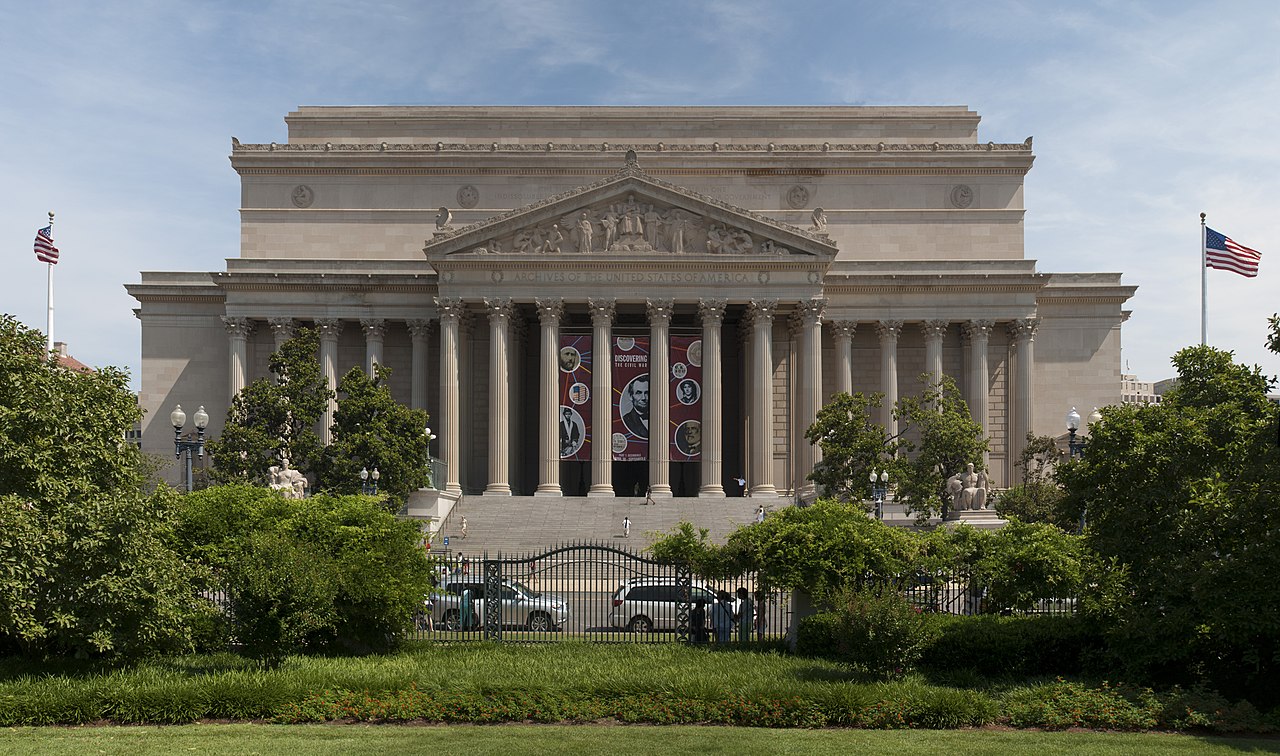
National Archives Museum
4.7(6.6K)google
4.4(455)yelp
HistoryEducationalHistoric BuildingIndoorMust-See
Overview
The National Archives Museum is a critically important historical sanctuary that preserves and displays the foundational legal and democratic documents of the United States federal government. Housed inside a grand neoclassical temple, the heavily secured Rotunda for the Charters of Freedom holds the original Declaration of Independence, the U.S. Constitution, and the Bill of Rights. Visitors can also explore extensive interactive galleries that detail the long, ongoing struggle for civil rights and voting equality in America.
Practical Info
Suggested DurationAbout 1-1.5 hours
Best TimeWeekday mornings right at 10:00 AM during fall or winter are the best times to visit. Lines for the Rotunda are shortest then, allowing you to quietly view America's Charters of Freedom: the Declaration, Constitution, and Bill of Rights.
Getting ThereTake the Metro Green or Yellow lines directly to the Archives-Navy Memorial-Penn Quarter station. The station exit is just behind the building; simply walk around to the Constitution Avenue side for the visitor entrance.
Travel Tips
- General admission is completely free, but the general standby security lines outside the main steps are brutal, often lasting 1-2 hours. The ultimate workaround is to pre-book a Timed-Entry Ticket online for a $1 processing fee. This barcode grants you access to the dedicated 'Reserved Entrance' lane, bypassing the mass queue.
- To preserve fragile parchment, the Rotunda uses intensely dimmed protective lighting; bring corrective lenses as the historic script is highly faded. Note the logistical loop: the tourist entrance is strictly on Constitution Avenue, while the exit spills out onto Pennsylvania Avenue. Do not tell companions to wait at the entrance.
Photo Tips
Photo Rules
- Inside the core Rotunda holding the original Declaration of Independence, Constitution, and Bill of Rights, rules are ironclad: absolutely no photography or videography of any kind is permitted, even with flash disabled. High-alert federal guards flank the display cases; raising a phone results in instant deletion of files and expulsion.
Reviews
Positive
- An unparalleled constitutional sanctuary; standing in the sacred Rotunda to view the original Declaration of Independence, Constitution, and Bill of Rights delivers profound historical resonance.
- The Public Vaults interactive wing is outstanding, letting history buffs use digital touchscreens to review declassified Cold War dossiers and real audio logs, injecting high educational entertainment.
- Flawless geographic logistics; situated on the Mall, the Metro station emerges right outside, and advanced online pass holders enjoy a separate, hyper-efficient priority entrance line.
- The on-site gift store is a haven for document buffs, selling immaculate full-scale parchment replicas of historical charters alongside highly creative, politics-themed stationery.
Heads up
- To safeguard fragile 200-year-old parchment ink, the Rotunda is kept in near-total darkness; bright anti-reflective spots on the thick secure cases make squinting to read signatures quite straining.
- They enforce a rigid, zero-tolerance ban on photography and videography throughout the charter galleries; the heavily armed guards monitor mobile devices closely, creating a stiff, military atmosphere.
- While admission is free, the outdoor non-reservation standby line during peak summer travel stretches painfully long across hot concrete sidewalks, involving excessive wait times in full sun.
- The main gallery relies on a restrictive, single-file one-way flow; whenever a large school trip clusters around the core display glass, it causes immediate bottleneck congestion that stalls the whole route.