Southernmost Point
4.5(43K)google
3.9(419)yelp
History
Overview
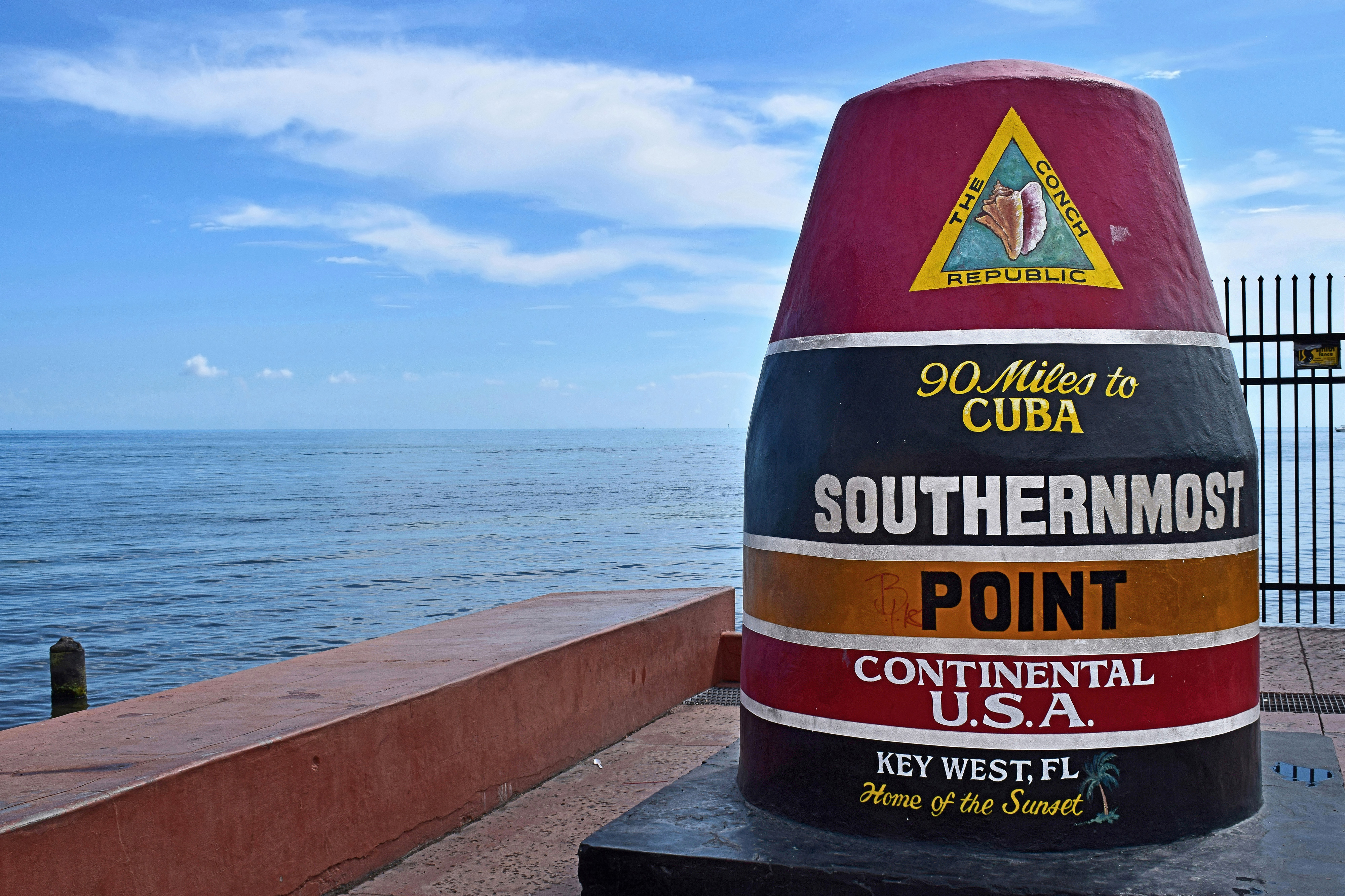
The Southernmost Point is one of the most photographed and iconic landmarks in the United States, marked by a massive, colorful anchored concrete buoy in Key West. Erected in 1983 by the city, the monument officially proclaims to be just 90 miles from Cuba, capturing the historical and geographical mystique of the island. Large crowds of travelers gather throughout the day to take pictures next to the painted concrete landmark. Set against the beautiful backdrop of the crashing Atlantic Ocean waves, this bustling landmark represents a bucket-list accomplishment for visitors exploring the edge of the continental United States.
Practical Info
Every day7:00 AM – 11:00 PM
Suggested Duration0.5-1 hour
Best TimeAmerica's defining geographical icon—the famous massive concrete buoy marking the southernmost point of the continental US—is best visited strictly between 6:00 AM and 7:30 AM year-round. Arriving before dawn grants you an incredibly rare, zero-line advantage to stand before the monument with absolute zero crowd interference, framing your photo against empty blue seas.
Getting ThereSituated right at the corner of Whitehead Street and South Street on the southern rim of Key West. Public transit features seamless access: take the free municipal Duval Loop bus straight to the Southernmost Point stop, located less than a half-block walk away. Avoid driving due to heavy residential permit-only enforcement; street parking is virtually zero.
Travel Tips
- Observe strict strict zoning and towing mandates: the intersection of South St and Whitehead St prohibits curbside idling or stopping. Surrounding residential lanes are designated zero-tolerance tow zones; secure your vehicle at nearby Fort Zachary Taylor spaces or utilize public loops; never attempt emergency-flash curbside idling.
Photo Tips
Best LightThe monument experiences intensive, unshaded visitor queuing exceeding one hour between 09:00 AM and 04:00 PM. Execute a tactical arrival between 06:30 AM and 07:15 AM to completely eliminate crowd delays while capturing direct, crisp golden hour lighting unobstructed by other tourists.
Gear
- Mitigate wave impact and device corrosion: the concrete buoy sits directly on an exposed seawall subject to high-tide sea spray and sudden ocean swells. Rogue waves regularly crest the retaining barrier, risking permanent saltwater destruction to camera equipment and posing immediate slip-and-fall hazards on wet algae.
Reviews
Positive
- As the iconic red, black, and yellow concrete buoy marking the southernmost point of the continental US, a photo here carries great symbolic value.
- The buoy is brightly colored and beautifully maintained against the backdrop of the endless Atlantic Ocean, with crashing waves creating a striking view.
- The surrounding coastal streets are beautiful, flanked by classic Southern architecture and swaying palm trees, making the walk over scenic.
- The queuing order onsite is generally well-disciplined; tourists self-organize into a single file and help each other take photos, showing a great vibe.
Heads up
- The core attraction is literally just a standalone concrete buoy; there's nothing else to see or experience besides lining up to take a picture.
- During heavy crowds, the photo line easily takes an hour or more; waiting under the blistering sun with zero shade is a painful experience.
- The surrounding streets are very narrow with no dedicated parking lot and very few metered spots; driving here frequently leads to severe gridlock.
- Many mobile unlicensed vendors push overpriced coconuts and plastic souvenirs to the queuing crowd, showing slightly loose management and noise.