
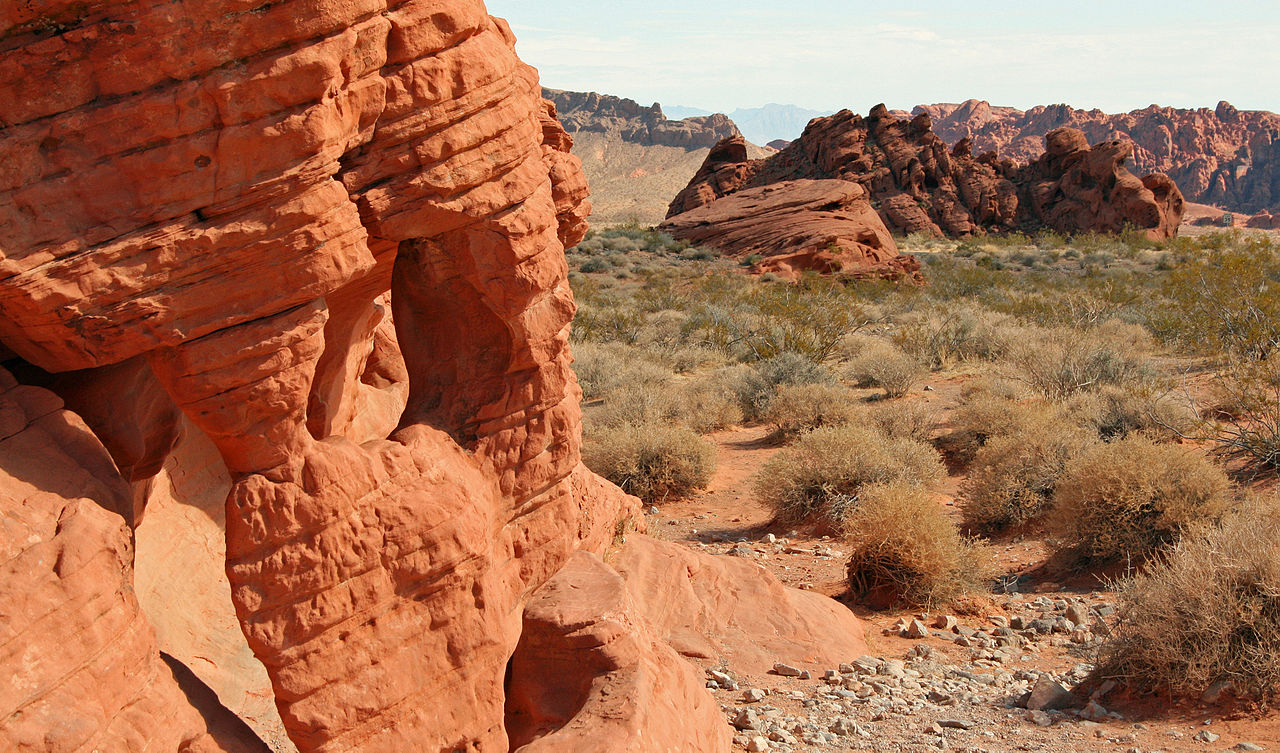
Valley of Fire State Park
4.8(18K)google
4.8(762)yelp
Rock FormationHikingMust-See
Overview
Valley of Fire State Park holds the monumental distinction of being California's neighboring Nevada's absolute oldest and largest state park, established originally in 1935 within a dramatic desert basin. Spanning over 46,000 acres of rugged wilderness, the park is internationally famous for its massive, sheer Aztec sandstone formations that glow like roaring flames under the bright desert sun. Traveling through reveals landmark formations like the Fire Wave, ancient Native American petroglyphs carved into stone, and petrified wood logs.
Practical Info
Suggested DurationAbout 4-6 hours
Best TimeLate autumn through early spring (November to March) offers perfect, cool conditions for exploring. Sunset and sunrise are the absolute prime photography times for the iconic Fire Wave, when low-angled sunlight makes the ancient Aztec sandstone look like blazing fire.
Getting ThereSituated roughly 50 miles northeast of Las Vegas. Take I-15 N for about 45 minutes to Exit 75, then transition onto Valley of Fire Highway East for another 15 minutes to clear the West Entrance. There is a standard per-vehicle daily entrance fee collected at the station.
Travel Tips
- Access via I-15 Exit 135 onto Valley of Fire Hwy requires a mandatory $15 out-of-state vehicle access fee. Operated under Nevada state charter, the US National Park Interagency Pass is totally invalid.
- The signature Fire Wave Trail undergoes a mandatory safety closure from June 1 to October 1 annually due to life-threatening desert heat indexes; trespassing past locked trailheads yields criminal citations.
Photo Tips
Photo Rules
- The park roads feature undulating dip blindspots; emergency stopping or driving onto unpaved soft sand shoulders causes immediate vehicle trapping, restricting all photo framing to designated paved pullouts.
Reviews
Positive
- Absolutely the most stunning, legitimate red rock wonder! The sprawling deep-red Aztec sandstones look like a raging fire under the sun, delivering world-class visuals.
- Highly convenient driving access and beautifully built. The iconic Fire Wave and White Domes loops are well-marked, and the scenic road winds seamlessly through red rock chasms.
- Public infrastructure is robust, boasting well-planned RV campsites, clean flush restrooms, shaded iron picnic pavilions, and flat wheelchair-accessible overlooks.
- Entry is an incredible budget bargain around $15 per vehicle! It preserves ancient Native petroglyphs with a sacred, peaceful vibe free from commercial noise.
- The massive, blazing red sandstone formations deliver top-tier flaming visuals; the iconic Fire Wave fully lives up to its global reputation.
- The scenic driving loop is smoothly paved; the main visitor center is modern, geological plaques are clear, and restrooms stay spotlessly clean.
- Park rangers manage public order professionally; high-risk ledge lines pack clear safety warnings and guidelines, making pull-offs secure.
- Charging an incredibly low vehicle fee (around $15), it grants access to epic natural earth history, offering unbeatable value in Nevada.
Heads up
- Extreme summer heat is a terrifying disaster! From June to September, temperatures regularly top 110-115°F, forcing management to shut down core trails for heat safety.
- Weekend and holiday peak hours bring heavy congestion on narrow scenic roads. Lots at top scenic photo spots fill instantly, leaving late arrivals circling for space.
- The interior is a dead desert. Outside of the visitor center, there are zero water kiosks or cell services along the roads, making a lack of hydration highly dangerous.
- Lacking constant guard patrols or security cameras, some iconic sandstone structures and ancient petroglyphs show visible damage from human scratching and graffiti.
- During hot summers from May to September, temperatures regularly spike above 104°F/40°C, triggering mandatory safety closures of exposed trails.
- Located deep in the remote Mojave Desert away from city hubs, public transit is zero; driving requires packing intensive sun protection and hydration.
- As specific photo landmarks are hyped online, small trail lots max out early, forcing cars to cruise long on burning asphalt, draining energy.
- Wilderness loops completely lack trash bins and water sources, forcing guests to pack out waste and water under a sky lacking artificial canopies.