
Poverty Point World Heritage Site
4.8(793)google
4.6(18)yelp
PrehistoricArchaeology
Overview
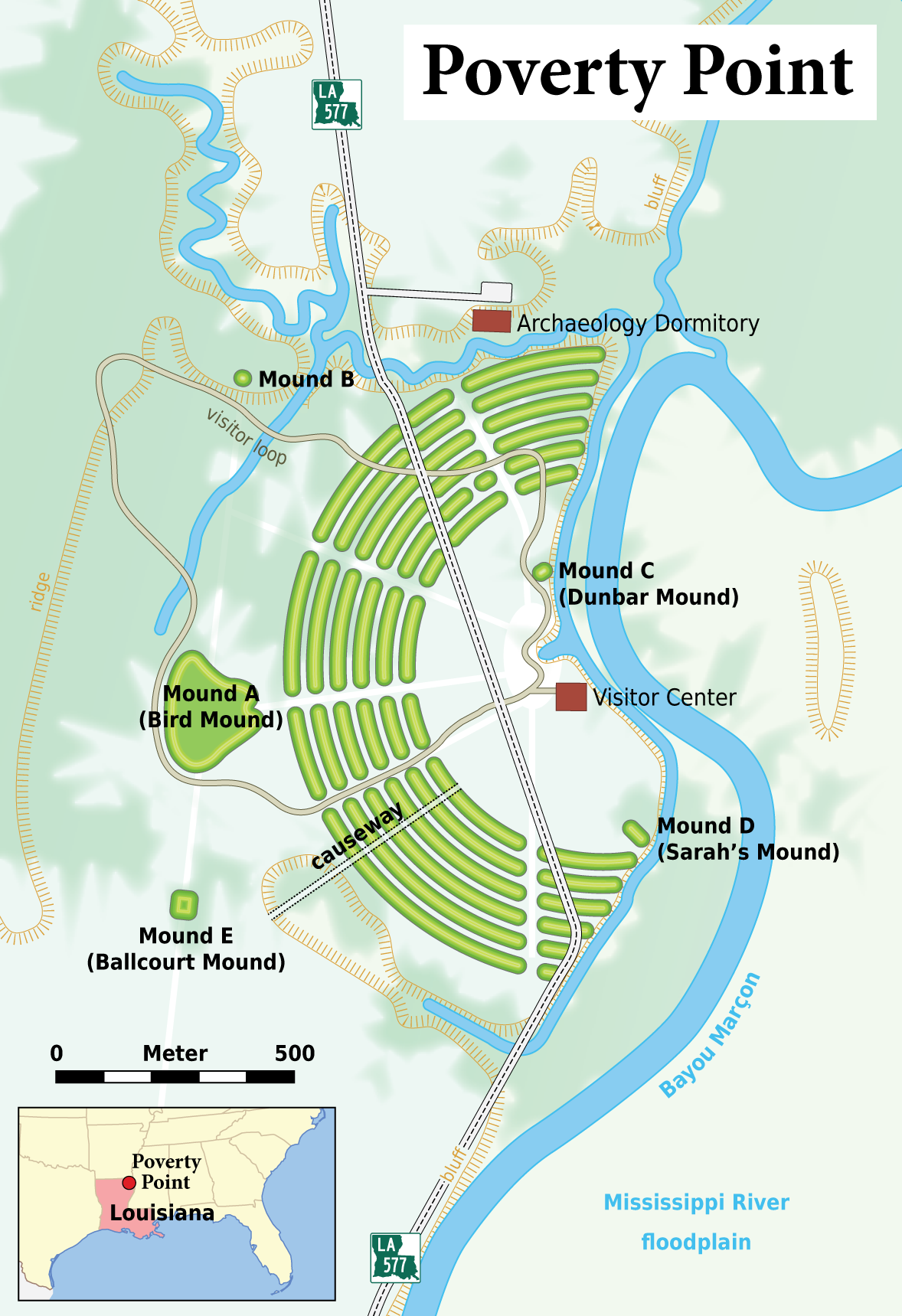
Poverty Point State Historic Site/Poverty Point National Monument (French: Pointe de Pauvreté; 16 WC 5) is a prehistoric earthwork constructed by the Poverty Point culture, located in present-day northeastern Louisiana. Evidence of the Poverty Point culture extends throughout much of the Southeastern Woodlands of the Southern United States. The culture extended 100 miles (160 km) across the Mississippi Delta and south to the Gulf Coast.
Practical Info
Suggested Duration2.5-4 hours
Best TimeAutumn (October to November) or spring (March to April) from 9:30 AM to 1:00 PM is highly recommended. As a UNESCO World Heritage Site, this 3,000-year-old Native American monumental earthwork complex is entirely outdoors with minimal shade. Cool seasons ensure a pleasant walk along the 2.6-mile trail or during the open-air tram tour.
Getting ThereLocated deep in northeastern rural Louisiana at Epps along LA-577. This historic site is highly remote; personal transport is required. From Monroe, drive east on I-20 E for 35 miles to Delhi, take Exit 153 for LA-17 N, drive north for 15 miles to Epps, and turn left onto LA-577 N following the prominent brown state park markers.
Travel Tips
- As a UNESCO World Heritage Site, bringing metal detectors, hand trowels, or geological rock hammers into this archaeological zone is a federal crime.
- The main earthen mound trail stretches 2.6 miles over uneven grassy ridges with zero trailside vending; fill canteens at the visitor center before hiking.
- The entire monument is a strict no-fly zone for civilian drones; federal park rangers will confiscate equipment and issue severe citations instantly.
Reviews
Positive
- As a UNESCO World Heritage site, it showcases massive earthen mounds hand-built by North American indigenous peoples over 3,000 years ago, packing immense historic depth.
- The visitor center museum is small but excellent, displaying fine excavated pottery, stone tools, and weapons; watching the introductory film first helps grasp the site perfectly.
- They offer a fantastic drive-through route and a seasonal tram tour, letting you easily explore the vast plains while knowledgeable rangers provide great insights.
- Far from commercial noise, the heritage site is peaceful, vast, and sacred with low crowds, allowing full immersion into the ancient atmosphere.
Heads up
- Visually, the site consists mostly of expansive grassy fields and a few grassy hills; without an interest in ancient history, it might seem monotonous.
- The location is extremely remote, tucked deep in rural northeastern Louisiana; with no proper restaurants or shops nearby, you must pack plenty of food and water.
- The outdoor hiking trails are long and severely lack mature trees for shade; the midday sun in summer is scorching, posing a high risk of heat exhaustion.
- Modern interactive digital displays and multi-language tools are sparse; all deep archaeological text is in English, creating a high barrier for foreign tourists.